
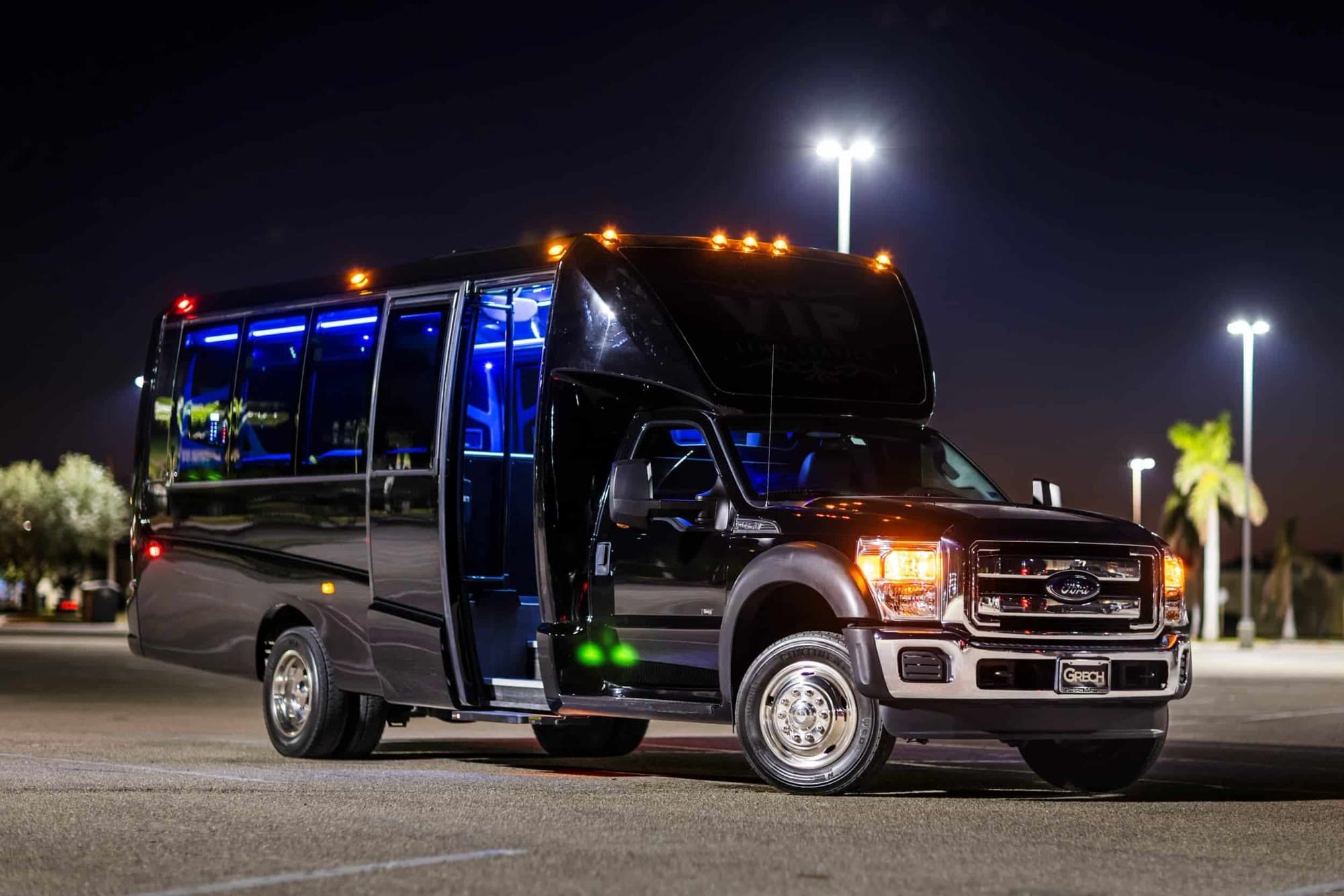
First-time party bus renters often find out the rules the hard way — a cleaning fee on the credit card two days after a great night, a driver pulling over because someone lit a cigarette, or a deposit dispute over decorations that seemed harmless. None of that needs to happen.
This guide covers the real rules: what operators typically allow, what they consistently prohibit, how policies differ between companies, and the etiquette that keeps everyone on good terms — including the driver. The most important thing to understand upfront is that party bus rules are set by the operator, not by a single universal standard. What is permitted on one vehicle may be explicitly banned on another. Read your contract, ask questions before you book, and brief your guests before they board.
What Operators Actually Control (and Why Policies Differ)
A party bus operator holds a for-hire vehicle license and sets rules based on three things: their insurance carrier's requirements, state and local regulations, and their own operational standards built from experience. Two operators running identical vehicles in the same city can have meaningfully different policies on alcohol, decorations, and standing passengers.
This is not a loophole — it is how for-hire transportation works. When you book through a marketplace like Buslane, operators are vetted and policies are disclosed before you commit. The key habit is simple: get the rules in writing before the booking is confirmed, not the morning of the trip.
The sections below cover the most common questions, with honest guidance on what to expect and what to ask.
Alcohol and Beverages
Alcohol policy is the question guests ask most often, and it has the least consistent answer.
Some operators work under a license that allows passengers to bring and consume their own alcohol (commonly called BYOB). Others allow open containers with no restrictions on what you bring. Others prohibit all alcohol in the cabin. Some allow sealed bottles only — no open containers while moving. A few charge a corkage or beverage fee.
The rule of thumb: never assume alcohol is permitted. The association between party buses and celebration does not equal a legal right to drink on board. Policies vary by operator license type and state law — confirm with your specific operator in writing before you book.
If alcohol is permitted, operators often add guardrails: no glass containers (cups and cans only), no red wine on light-colored upholstery, no hard liquor in the hours immediately before boarding. These are reasonable ask — protect everyone from a cleaning dispute after the fact.
Age verification is the renter's responsibility in most contracts. If alcohol is permitted on board, the operator will expect the renter to confirm that all consuming passengers meet the legal drinking age in your state. Operators reserve the right to end a trip early if this is violated — which means forfeiting your hire time with no refund.
Food and Snacks
Most operators permit food on board, with conditions. The general principle is the same as alcohol: light and low-mess is welcome; anything that can stain or leave lasting odor is not.
What's usually fine: packaged snacks, chips, finger foods, wrapped sandwiches, cold cuts, fruit, bottled water and canned beverages.
What operators often restrict or prohibit: hot food with sauces (think wings, pasta), red wine and dark-colored juices on light upholstery, anything with strong odors that linger in an enclosed vehicle, and glassware.
A cleaning deposit — often returned in full at the end of the trip if the interior is left in reasonable shape — is common when food is allowed. Think of it like a hotel security deposit: you get it back as long as you treat the space respectfully.
The driver is not responsible for clearing food or trash during the trip. Designate someone in your group to collect cups and wrappers before each stop so you're not handing back a vehicle that looks like a stadium after a game.
Decorations: What Stays and What Goes
Decorating the party bus is one of the most common sources of post-trip disputes — and the most avoidable.
Generally permitted: balloons (helium or air-filled), fabric banners, sashes, battery-powered LED string lights, tissue pom-poms attached with suction cups or clear command hooks.
Generally prohibited: anything using tape directly on upholstery or windows (leaves residue), spray string (nightmare to clean from carpet and seating), loose glitter (impossible to remove fully and often triggers an automatic cleaning charge), confetti cannons, and open flames including candles.
If a decoration requires attaching anything to the vehicle's interior, ask first. The test is simple: if it leaves a mark, a residue, or a material that requires specialized cleaning, expect to pay for it. The easiest approach is to confirm your specific decoration plan with the operator at booking — a one-paragraph email is enough — and save the response.
For bachelorette and birthday groups planning elaborate decor, check whether the operator offers early-access time before the hire window officially starts. Some include it, some charge for it; it is better to ask than to discover the bus is arriving at your door with 10 minutes to set up.
For more on planning the full experience, see the bachelorette party bus planner for Seattle — it covers venue sequencing, itinerary timing, and decoration specifics.
Smoking and Vaping
This one is close to universal: no smoking, no vaping inside the vehicle. Not at the back, not near an open window, not "just for a second."
Charter vehicles are enclosed commercial spaces. Operators face cleaning costs, insurance complications, and state-level regulations that make indoor smoking essentially non-negotiable. Violations are typically treated as a contract breach — the driver stops the vehicle, asks the guest to extinguish immediately, and the renter may be charged a flat fee (often listed explicitly in the contract) regardless of how brief the incident was.
If members of your group smoke, plan for it. Most drivers are willing to accommodate a brief stop — just build it into your itinerary rather than expecting an unscheduled pause mid-journey. Discuss this with your operator when booking so the driver knows to expect it.
Standing While the Bus Is Moving
Whether guests can stand while the party bus is in motion is one of the less obvious rules — and one that genuinely varies.
Some party buses are specifically designed with standing-room areas: handrails, a lowered ceiling section, open floor space between seating bays. Others are converted coaches or vans where standing in the aisle is a safety hazard and operators require all passengers to be seated while moving.
From a pure physics standpoint, an unrestrained person standing in a moving vehicle during a hard brake or sudden turn faces real injury risk. This is not paranoia — it is the reason operators specify it in contracts.
Ask your operator directly whether standing is permitted and where. Do not assume because the interior has open floor space that standing is allowed.
The Damage Deposit and What Triggers Charges
Most party bus contracts include a damage deposit held at booking. Common post-trip charges include:
- Excessive mess beyond normal cleaning (food debris ground into seating, drinks soaked into carpet)
- Vomit cleanup — almost always itemized as a separate biohazard cleaning fee
- Broken fixtures (cup holders, LED panels, grab bars)
- Upholstery damage from decorations, sharp objects, or footwear on seating
- Smoking penalty — often a flat rate named in the contract
The deposit is typically returned within a few business days if the vehicle is returned in normal condition. The renter is responsible for all of this — not the individual guest who caused the damage. That is the legal reality of signing a charter contract.
The practical implication: if you are the renter, brief your group before they board. Assign someone to keep an eye on the interior during the trip. A two-minute conversation at the start of the night prevents a three-hundred-dollar surprise on your statement after it.
Guest Etiquette: The Unwritten Rules
Beyond what the contract spells out, a few norms make a party bus trip better for everyone — including the driver, who is a professional doing a job.
Respect the driver. They are not a nightclub host or a party participant. Keep the cab area clear, do not lean forward to talk to them while moving, and do not ask them to make unauthorized stops or exceed the agreed itinerary without checking first.
Stay within your group's booked window. Running over time is not free. Operators typically charge for every additional 30 or 60 minutes beyond the agreed hire period. If the night is going well and you want to extend, ask the driver before the time expires — not after.
Control your headcount. Showing up with more passengers than the contract allows is a problem. Party buses are rated for specific capacities — for a party bus, that is typically 15–40 passengers depending on the vehicle — and exceeding the rated load is both a safety issue and a contract violation. Operators can and do refuse departure until the headcount is correct.
Treat the space like a rental, not a venue. You are not the only group that uses this vehicle. The crew that cleans and services the bus between bookings should not need to spend an hour extracting food from the carpet because the group decided it was acceptable to make a mess. A reasonable baseline: leave it in similar condition to how you found it.
How Rules Vary by Operator
The single most useful thing you can do before any party bus booking is read the specific operator's rental agreement — not a general FAQ, not an assumption from past trips, the actual document.
Key policy areas to confirm in writing:
- Alcohol: BYOB permitted? Open containers? All alcohol prohibited?
- Food: What is allowed or restricted?
- Decorations: What materials are prohibited?
- Smoking/vaping: Location of any permitted smoking stops?
- Standing: Allowed while moving?
- Damage deposit: Amount, what triggers charges, return timeline
- Overtime: Rate for each additional period beyond the booked window
- Early termination: Under what conditions can the operator end the trip?
When you book through Buslane, operator policies are part of the vetting process — you can ask these questions before committing. Get a quote for a Seattle party bus trip here and confirm the specifics with the operator directly.
Before You Board: A Quick Checklist for the Renter
The person who signed the contract carries the responsibility for the group. Five minutes of prep before departure prevents most common problems:
- Share the key rules with your group — in the group chat, not just verbally at the pickup point
- Confirm the itinerary with the driver (stops, timing, any planned extensions)
- Identify one sober or low-consumption point of contact who can handle issues mid-trip
- Do a quick headcount against your booked capacity before the door closes
- Collect any food, wrappers, and empty containers before each stop so cleanup stays manageable
- Have the driver's number saved — not just the booking platform's number — in case of any real-time coordination needed
Party buses are a genuinely fun way to move a group through an evening in Seattle. The logistics are not complicated when you know the rules upfront. For more on what a party bus costs in Seattle and how to structure the booking, see our Seattle party bus cost guide.