
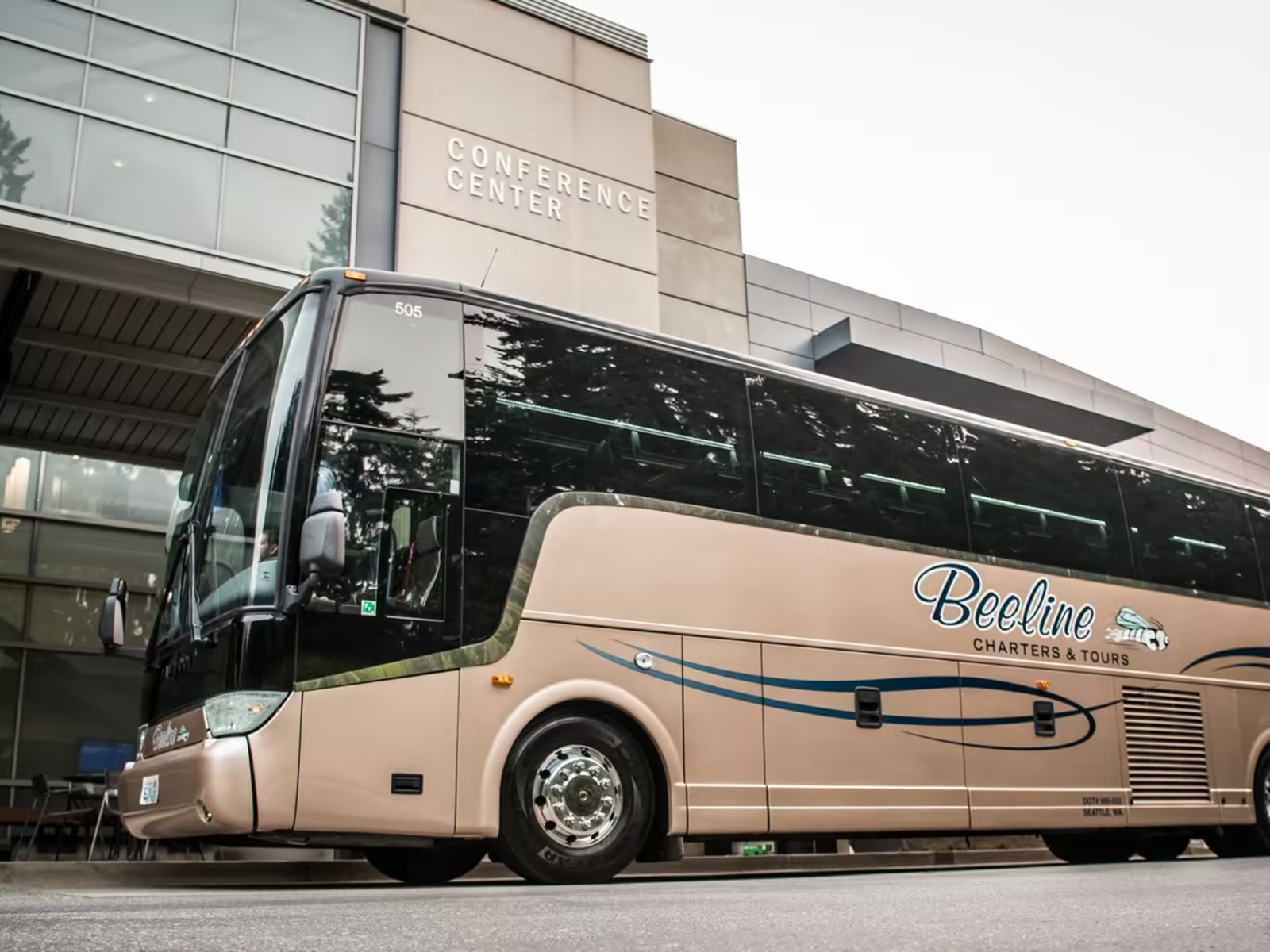
Conference and convention transportation is a logistics operation dressed up as a booking. The naive version — "we need buses for our event" — misses what actually determines success: moving hundreds of attendees between hotels and the venue in two daily surges, with short waits and no one stranded. Get the fleet plan right and transportation becomes invisible in the best way. Get it wrong and it's the thing attendees complain about in the post-event survey.
This guide covers how to plan attendee shuttle loops, size the fleet to peak flow, and coordinate multiple hotels for an event in Seattle. It pairs naturally with our corporate shuttle service guide, which covers the recurring-program cousin of event transport.
Conference Transport Is About Peak Flow, Not Headcount
The single most important planning idea: you size the fleet to the busiest window, not total attendance. A 400-person conference doesn't move 400 people continuously — it moves most of them in two spikes: the morning arrival before the opening session and the end-of-day departure when the last session lets out.
Everything follows from those two peaks:
- Estimate how many attendees must move in the busiest 30–60 minutes.
- Divide by vehicle capacity and target loop time to get vehicles needed at peak.
- Scale down during mid-day lulls — fewer vehicles, or paused service — then ramp back up for the departure surge.
A conference that plans for average flow gets crushed at 8:30 a.m. A conference that plans for peak flow runs smoothly all day and simply idles capacity when it's not needed.
Plan transportation for your event
The Shuttle Loop
The workhorse of conference transport is the shuttle loop — a bus circulating hotel → venue → hotel on repeat during the flow windows. Two levers tune it:
- Frequency: set so attendees rarely wait more than 10–15 minutes at peak. More vehicles on the loop means shorter waits.
- Loop time: the round-trip duration. Shorter loops (close hotels, light traffic) clear more attendees per hour per bus.
A 24–35 passenger minibus on a tight 20-minute downtown loop is the Seattle default — maneuverable around the convention district and frequent enough to keep waits short. For high-volume moves, a 50–56 seat charter bus clears far more per run but needs more room to stage and turn. The minibus and charter bus pages cover the trade-offs, and our charter bus capacity guide breaks down seats by vehicle.
Coordinating Multiple Hotels
Most conferences book a room block across several hotels, which turns one loop into a network problem. Two proven models:
Chained Loop
One route visits multiple hotels in sequence before heading to the venue. Keeps the fleet small but lengthens ride time for attendees at the first stop (they ride through every other pickup). Best for nearby hotels with light per-property counts.
Dedicated Vehicles
A vehicle (or mini-fleet) per hotel or hotel cluster. Shorter, more predictable rides at higher fleet cost. Best for far-flung hotels or properties with heavy attendee counts that would overwhelm a shared loop.
| Situation | Better model |
|---|---|
| 2–3 nearby hotels, light counts | Chained loop |
| Hotels spread across downtown/Eastside | Dedicated vehicles |
| One dominant hotel + a few small ones | Dedicated for the big one, chained for the rest |
The right answer usually mixes both. Map your hotels and per-property headcounts first — that's the input that decides the model.
Seattle-Specific Logistics
Seattle helps in one big way and challenges you in another:
- The help: the Seattle Convention Center sits in a compact downtown core with many hotels within a short radius, which keeps loop times short and makes chained loops viable.
- The challenge: during peak convention season, room blocks spill to hotels farther out, and downtown traffic plus event congestion can stretch loop times unpredictably. Building schedule buffer into peak windows is essential.
Don't forget the airport bookends. Many attendees arrive and depart through SeaTac, and a group arrival transfer is a distinct planning task from the daily hotel loops — our SeaTac group airport transportation guide covers that leg.
How Convention Transportation Is Priced
Like corporate shuttles, conference transport is billed by vehicles and contracted service hours across the event — not per attendee. Your cost is built from:
- Fleet size — vehicles at peak.
- Run windows per day — arrival surge, mid-day, departure surge.
- Event days — a three-day convention is three times the daily plan.
The useful consequence: per-attendee cost falls as ridership rises. A loop costs the same whether the bus runs 60% or 95% full, so encouraging attendees onto the shuttle (versus rideshare) improves your economics. Confirm a few things when comparing quotes: how mid-day idle time is billed, driver gratuity policy for multi-day service, and overtime terms if a session runs long. Vehicle tiers are on the pricing page, and related event moves are covered on the corporate transportation page.
Getting an Accurate Quote
To scope conference transport, an operator needs four things:
- Venue and attendee hotels (with locations).
- Headcount per hotel and total attendance.
- Daily schedule — session start/end times that define your flow peaks.
- Event dates and setup/teardown needs.
With those, you'll get a fleet plan and a per-day cost. Bring them early: peak-season vehicles and drivers are committed well ahead, and a good operator will help you right-size the fleet rather than overselling it.
Get a conference transportation quote
Bottom Line
Conference and convention transportation in Seattle is a peak-flow logistics problem: size the fleet to your busiest arrival and departure windows, run tight shuttle loops that keep waits under 10–15 minutes, and choose a chained-loop or dedicated-vehicle model based on how your hotels are spread. Budget by fleet and service hours, not per head — and lean on Seattle's compact downtown to keep loops short.
When your venue, hotels, and schedule are set, tell us about your event and we'll build a fleet plan with vetted Seattle operators.